
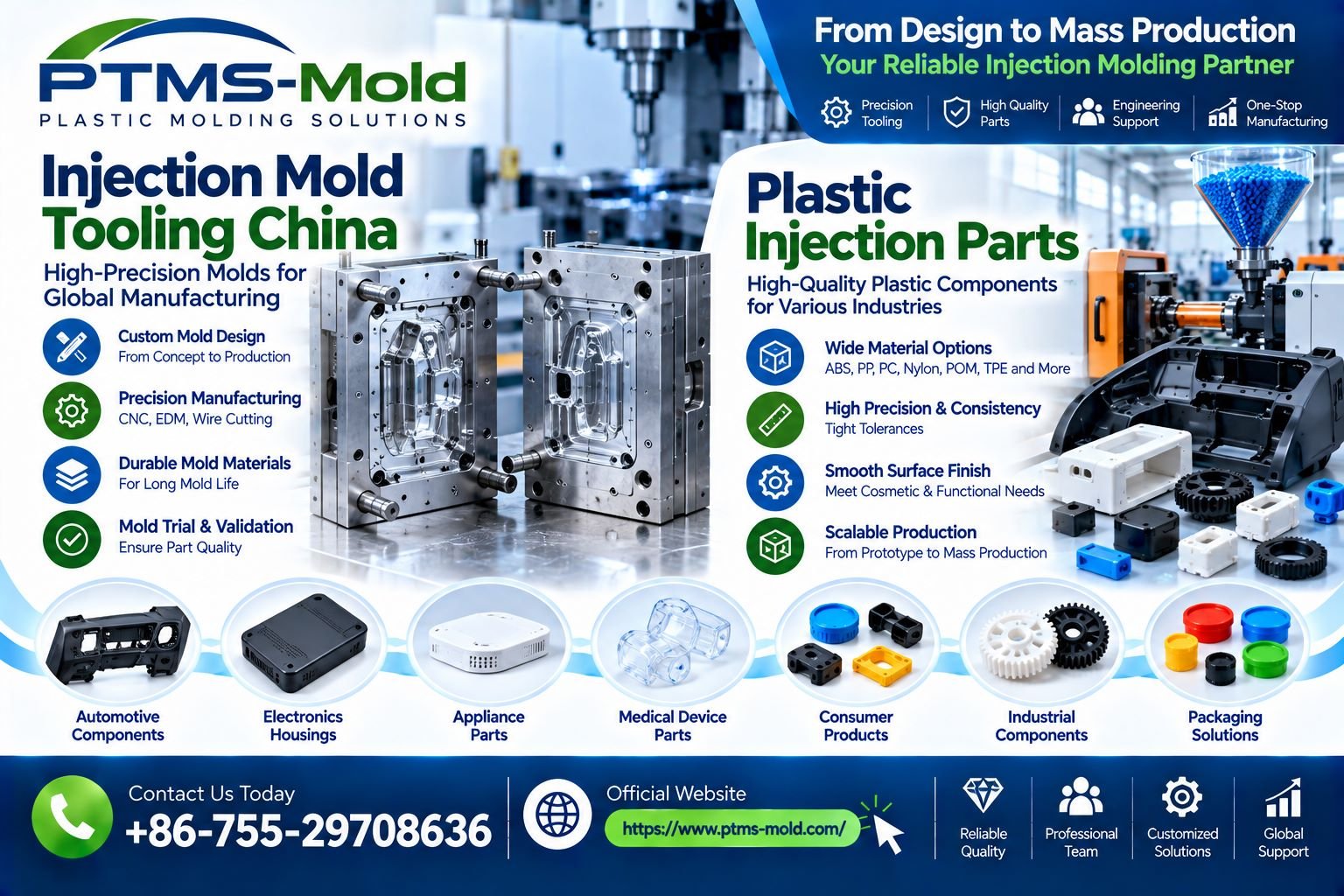
Plastic manufacturing businesses are paying closer attention to material utilisation, production efficiency, and resource management. As manufacturers seek to reduce operational waste without compromising product quality, injection mold engineering is becoming an important part of responsible production planning.
Injection Mold Tooling China offers sourcing opportunities for manufacturers exploring precision molds, efficient production systems, and customised plastic component manufacturing.
Meanwhile, the production of Plastic Injection Parts involves several opportunities to reduce unnecessary material consumption, improve process consistency, and limit manufacturing defects.
An emerging focus is designing efficient production processes from the beginning rather than relying exclusively on corrective measures after waste occurs.
For OEM manufacturers, industrial buyers, and product development companies, understanding these principles can support more efficient manufacturing decisions.
Why Material Efficiency Matters in Injection Molding
Injection molding uses thermoplastic materials to manufacture components with detailed geometries and repeatable dimensions.
However, inefficient processes may produce excess runners, rejected parts, or unnecessary material consumption.
These losses can increase production costs and create additional waste-management requirements.
Manufacturers are therefore examining how tooling design and processing conditions influence material efficiency.
Reducing waste requires coordinated attention to product geometry, mold engineering, and production monitoring.
Understanding Injection Mold Tooling China
Injection Mold Tooling China refers to injection mold design and manufacturing services provided by tooling suppliers operating in China.
These services may include product engineering, mold development, CNC machining, assembly, mold trials, and production support.
Tooling design influences the amount of plastic required during manufacturing and the consistency of finished components.
For example, runner configuration, cavity arrangement, and cooling-channel design can affect material consumption and processing efficiency.
International buyers should review technical proposals carefully and establish appropriate manufacturing specifications.
The objective is selecting tooling that supports reliable production throughout its intended service life.
How Plastic Injection Parts Are Manufactured
Plastic Injection Parts are produced by injecting molten thermoplastic material into a mold cavity.
After the material cools and solidifies, the component is removed and inspected.
The process can manufacture products such as electronic housings, appliance components, automotive accessories, and industrial fittings.
However, successful production requires appropriate material selection and controlled operating parameters.
Incorrect processing conditions can contribute to defects and rejected components.
Manufacturers should therefore evaluate how product design, tooling construction, and processing requirements interact.
Why Runner System Design Influences Waste
Runner systems carry molten plastic from the injection unit toward the mold cavities.
Conventional cold-runner systems can generate solidified runner material that must be separated from the finished components.
Under suitable conditions, some materials may be reused after appropriate processing and quality evaluation.
However, not all materials or applications permit reprocessing.
Hot-runner systems maintain plastic in a molten state within selected delivery channels, potentially reducing solidified runner waste.
The choice between hot-runner and cold-runner systems depends on resin characteristics, tooling investment, maintenance, and production requirements.
Comparing Hot-Runner and Cold-Runner Systems
| Manufacturing Factor | Hot-Runner System | Cold-Runner System |
| Material Flow | Heated delivery channels | Conventional runner channels |
| Runner Waste | Can reduce solidified runner waste | May generate removable runners |
| Initial Investment | Generally more complex | Often simpler |
| Maintenance | Requires heating-system management | Typically less complex |
| Material Compatibility | Depends on resin and process | Depends on resin and design |
| Suitable Applications | Selected repeated-production operations | Prototype and various production requirements |
Neither system is automatically the best option. Buyers should evaluate technical feasibility and total manufacturing costs.
How Mold Cooling Affects Production Efficiency
Cooling is an important stage of injection molding because plastic components must solidify sufficiently before removal.
Uneven cooling may contribute to warpage, dimensional variation, or longer processing cycles.
Appropriate cooling-channel design can help manage temperature distribution throughout the mold.
Manufacturers may use conventional cooling arrangements or specialised solutions where justified.
However, reducing cooling duration excessively can create additional defects.
An efficient production process must balance cycle performance with component quality.
This makes cooling design an important engineering consideration during tooling development.
Reducing Rejected Plastic Components
Manufacturing defects can create significant material losses.
Common problems include incomplete filling, excessive flash, dimensional inaccuracies, and surface imperfections.
These defects may result from tooling limitations, unsuitable processing settings, or material-related factors.
Manufacturers can address them through structured troubleshooting and appropriate process controls.
For example, consistent material drying may be important for moisture-sensitive thermoplastics.
Similarly, monitoring temperature and injection parameters can help identify unusual process behaviour.
Reducing reject rates can improve material utilisation while supporting production consistency.
Understanding Recycled and Reprocessed Plastic Materials
Recycled plastics can offer opportunities for certain injection molding applications.
However, material suitability depends on the intended component requirements.
Mechanical properties, contamination, colour consistency, and processing behaviour may differ between virgin and recycled materials.
Manufacturers should evaluate whether recycled content is appropriate for the intended product.
Applications involving strict safety, regulatory, or mechanical requirements may require additional qualification.
Reprocessed manufacturing scrap must also be managed according to suitable quality procedures.
Environmental benefits should be assessed using actual material and process information rather than unsupported sustainability claims.
Why Production Monitoring Supports Efficiency
Manufacturing efficiency depends on having reliable information about the process.
Useful indicators may include:
- Material consumption per acceptable component.
- Number of rejected parts.
- Production cycle consistency.
- Equipment interruptions.
- Mold maintenance requirements.
- Component inspection results.
Tracking these indicators can help businesses identify recurring production challenges.
However, collecting information provides limited value unless it supports appropriate corrective actions.
Manufacturers should establish clear performance requirements and review production results against those expectations.
Choosing a Manufacturer for Efficient Plastic Production
Businesses evaluating injection molding suppliers should consider their ability to support material-efficient manufacturing.
Important factors include:
- Tooling Engineering: Evaluate runner, cavity, and cooling-system design.
- Material Expertise: Confirm knowledge of relevant thermoplastic properties.
- Production Validation: Review mold trials and sample approval procedures.
- Waste Management: Discuss material utilisation and appropriate scrap handling.
- Quality Assurance: Establish defect limits and inspection requirements.
- Process Improvement: Review production monitoring and maintenance practices.
A suitable supplier should connect manufacturing efficiency with reliable product performance.
Frequently Asked Questions (FAQs)
1. What is Injection Mold Tooling China?
It refers to sourcing injection mold design, engineering, and manufacturing services from companies operating in China.
2. What are Plastic Injection Parts?
They are components created by injecting molten thermoplastic material into a mold, allowing it to cool, and removing the formed product.
3. How can injection mold design reduce plastic waste?
Suitable runner systems, efficient cavity arrangements, controlled cooling, and appropriate process validation can help reduce unnecessary material consumption.
4. What is the difference between hot-runner and cold-runner molds?
Hot-runner molds use heated channels to maintain molten plastic, while cold-runner molds allow runner material to solidify and be removed with the molded parts.
5. Can recycled plastic be used for injection molding?
Yes, in suitable applications. Material quality, component requirements, processing compatibility, and relevant regulations must be evaluated.
Media Contact
Department: Injection Mold Tooling and Plastic Manufacturing Enquiries
Contact: +86-755-29708636
Email: sales@ptms-mold.com
Official Website: https://www.ptms-mold.com/