
Agricultural equipment manufacturing is placing greater emphasis on durable construction, practical maintenance, and reliable metal fabrication. From grain handling systems to harvesting equipment and agricultural processing machinery, manufacturers require metal components capable of performing under demanding operating conditions.
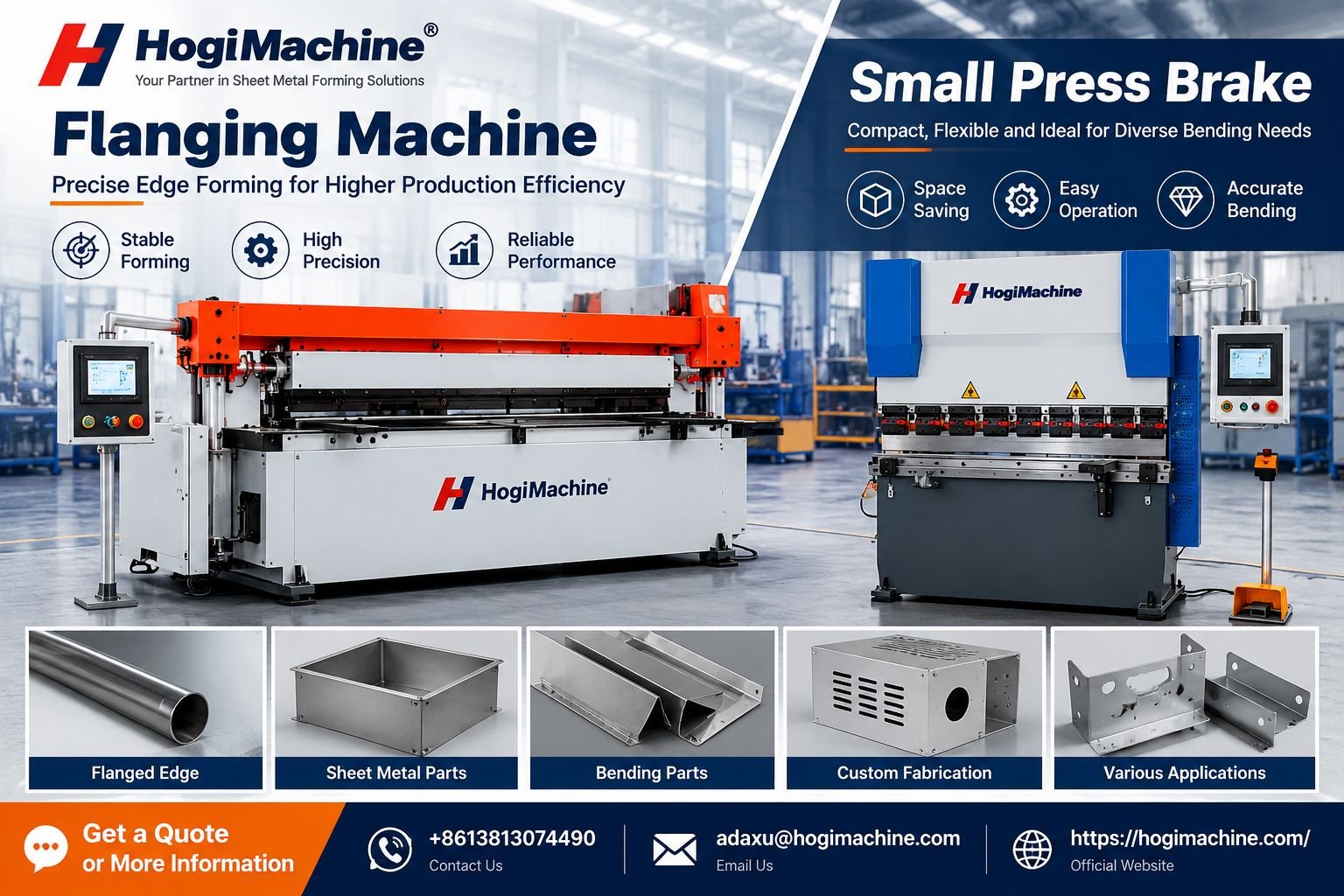
A Flanging machine supports specialised edge-forming operations for suitable metal components, helping manufacturers develop joining features, reinforced edges, and application-specific profiles.
Meanwhile, a small press brake provides controlled sheet metal bending for manufacturing brackets, equipment covers, protective panels, and compact structural components.
These technologies offer different manufacturing capabilities but can complement each other in agricultural equipment production.
For machinery manufacturers, fabrication workshops, and industrial equipment buyers, understanding their applications can improve component design, production accuracy, and equipment maintainability.
Agricultural Machinery Creates Unique Fabrication Challenges
Agricultural equipment often operates in environments containing dust, moisture, vibration, and abrasive materials.
Metal components used in such equipment must withstand appropriate operational loads while remaining accessible for inspection and maintenance.
Poorly manufactured covers, brackets, and connecting features can create assembly problems or premature component damage.
Consequently, fabrication businesses must consider more than component appearance.
Suitable material selection, forming accuracy, and practical assembly design are essential considerations.
What Is a Flanging Machine?
A Flanging machine is industrial metal-forming equipment designed to bend or shape the edges of compatible workpieces into specified profiles.
Depending on its construction, it may process circular, cylindrical, or other suitable metal components.
In agricultural equipment manufacturing, specialised flanging operations may help create formed edges for grain handling components, metal containers, and selected machinery assemblies.
These profiles can contribute to joining arrangements or structural requirements.
However, individual machines differ in their forming capabilities.
Manufacturers should confirm workpiece geometry, material thickness, tooling compatibility, and required flange dimensions before selecting equipment.
How a Small Press Brake Supports Farm Equipment Manufacturing
A small press brake bends compatible sheet metal using suitable punch and die arrangements.
Compact press brakes can support the manufacture of smaller components used in agricultural machinery.
Examples include mounting brackets, inspection covers, equipment panels, guards, and control cabinet components.
Their practical value depends on matching machine capacity with component dimensions and material requirements.
Manufacturers must consider bending length, forming force, bend radius, and tooling.
Accurate bending helps ensure that manufactured components fit correctly within larger equipment assemblies.
Applications Across Agricultural Machinery
Different agricultural equipment components require different forming processes.
| Equipment Component | Possible Forming Requirement | Suitable Equipment |
| Grain Handling Components | Specialised formed edges | Compatible flanging machine |
| Equipment Mounting Brackets | Controlled angular bends | Small press brake |
| Machinery Inspection Covers | Accurate panel bending | Small press brake |
| Circular Metal Assemblies | Application-specific flange profiles | Suitable flanging equipment |
| Protective Equipment Panels | Defined bends and mounting features | Small press brake |
| Agricultural Processing Housings | Combined forming and joining features | Equipment selected by geometry |
Machine suitability depends on the actual design rather than the product category alone.
Why Metal Forming Accuracy Matters for Agricultural Equipment
Agricultural machinery contains numerous components that must fit together correctly.
Mounting brackets may support motors, sensors, or other mechanical assemblies.
Protective covers must align with suitable fastening positions and allow safe access where required.
Inaccurate bends or flange profiles can create installation difficulties.
For example, an incorrectly formed bracket may interfere with adjoining components or prevent proper fastening.
Dimensional inspection helps manufacturers confirm that finished components match approved engineering drawings.
Material Selection for Demanding Environments
Agricultural equipment manufacturers may use mild steel, galvanised steel, stainless steel, or aluminium, depending on the application.
Material selection should account for mechanical strength, corrosion resistance, operating conditions, and manufacturing requirements.
Different metals respond differently to bending and flanging.
Material thickness and mechanical properties influence forming force and springback.
Protective coatings may also require special handling to minimise surface damage.
Manufacturers should establish suitable forming procedures based on the selected material rather than applying identical settings to every workpiece.
Designing Components for Vibration and Repeated Loading
Agricultural machinery may experience substantial vibration during operation.
Repeated mechanical loading can affect brackets, covers, fasteners, and formed connections.
A suitable bend or flange can contribute to component stiffness, but poor geometry may create localised stress concentrations.
Engineers should evaluate material thickness, loading direction, bend radius, and fastening arrangements.
For fatigue-sensitive components, appropriate engineering analysis and testing may be necessary.
Metal-forming machinery helps produce the required geometry, but structural reliability depends on the complete component design.
How Better Fabrication Supports Equipment Maintenance
Agricultural equipment often requires inspection, cleaning, and replacement of worn components.
Maintenance-friendly design can simplify these operations.
Accurately formed access panels and removable covers can help technicians reach designated service areas.
Similarly, properly positioned mounting brackets can support straightforward component replacement.
However, serviceability must be considered during product development.
Fabricators should coordinate with equipment designers to confirm access clearances, fastening locations, and component removal procedures.
A well-formed part is most useful when it also supports the intended maintenance process.
Reducing Manufacturing Problems Through Prototype Testing
Prototype fabrication allows manufacturers to evaluate component geometry before approving repeated production.
For agricultural equipment, testing may involve assembly compatibility, mounting access, material deformation, and mechanical suitability.
A prototype bracket may reveal interference with another component, while a formed edge may require adjustment to improve joining accuracy.
Representative samples help engineers identify these concerns.
Manufacturers should document approved modifications and verify critical dimensions.
This approach supports more dependable production without assuming that every component can be manufactured successfully from its initial drawing.
Why Tooling and Machine Maintenance Matter
Metal-forming equipment requires appropriate maintenance to preserve manufacturing consistency.
Tooling damage, machine misalignment, and worn components can influence finished product dimensions.
Press brake operations require suitable punch and die conditions.
Flanging equipment may involve specialised forming tools that require inspection according to manufacturer instructions.
Preventive maintenance can help identify developing problems before they affect product quality.
Operators should follow approved maintenance procedures and applicable machinery safety requirements.
Reliable equipment performance supports consistent manufacturing results.
Selecting Metal Forming Equipment for Agricultural Applications
Agricultural machinery manufacturers should evaluate equipment against actual component specifications.
Important considerations include material capacity, workpiece dimensions, forming accuracy, available tooling, operator safety, and technical support.
Businesses should also review whether the machine can accommodate their typical production quantities.
Representative forming trials can help verify suitability.
Where multiple component types are manufactured, equipment selection should reflect the overall production mix.
The objective is to choose machinery capable of delivering consistent results without unnecessary operational complexity.
Frequently Asked Questions (FAQs)
1. What is a Flanging machine used for?
A flanging machine forms compatible metal edges into specified profiles for joining, reinforcement, or specialised manufacturing applications.
2. What is a small press brake?
A small press brake is compact sheet metal bending equipment used to manufacture brackets, panels, covers, and other suitable metal components.
3. Can flanging machines be used in agricultural equipment manufacturing?
Yes. Suitable machines can produce specialised formed edges for compatible agricultural equipment components and metal assemblies.
4. Which metals are suitable for agricultural machinery fabrication?
Mild steel, galvanised steel, stainless steel, and aluminium may be used, depending on mechanical and environmental requirements.
5. How can manufacturers improve agricultural metal component quality?
Manufacturers should select appropriate materials, use compatible forming equipment, verify engineering drawings, conduct representative testing, and maintain consistent inspection procedures.
Media Contact
Department: Industrial Metal Forming and Agricultural Machinery Fabrication Enquiries
Phone: +86 138 1307 4490
Email: daxu@hogimachine.com
Official Website: https://hogimachine.com/