
Modern public buildings increasingly incorporate glass partitions, entrance doors, interior screens, and transparent architectural features. These installations provide visual openness, but they also require careful design to meet practical building requirements.
A suitable glass machine helps manufacturers produce glass components according to defined architectural specifications.
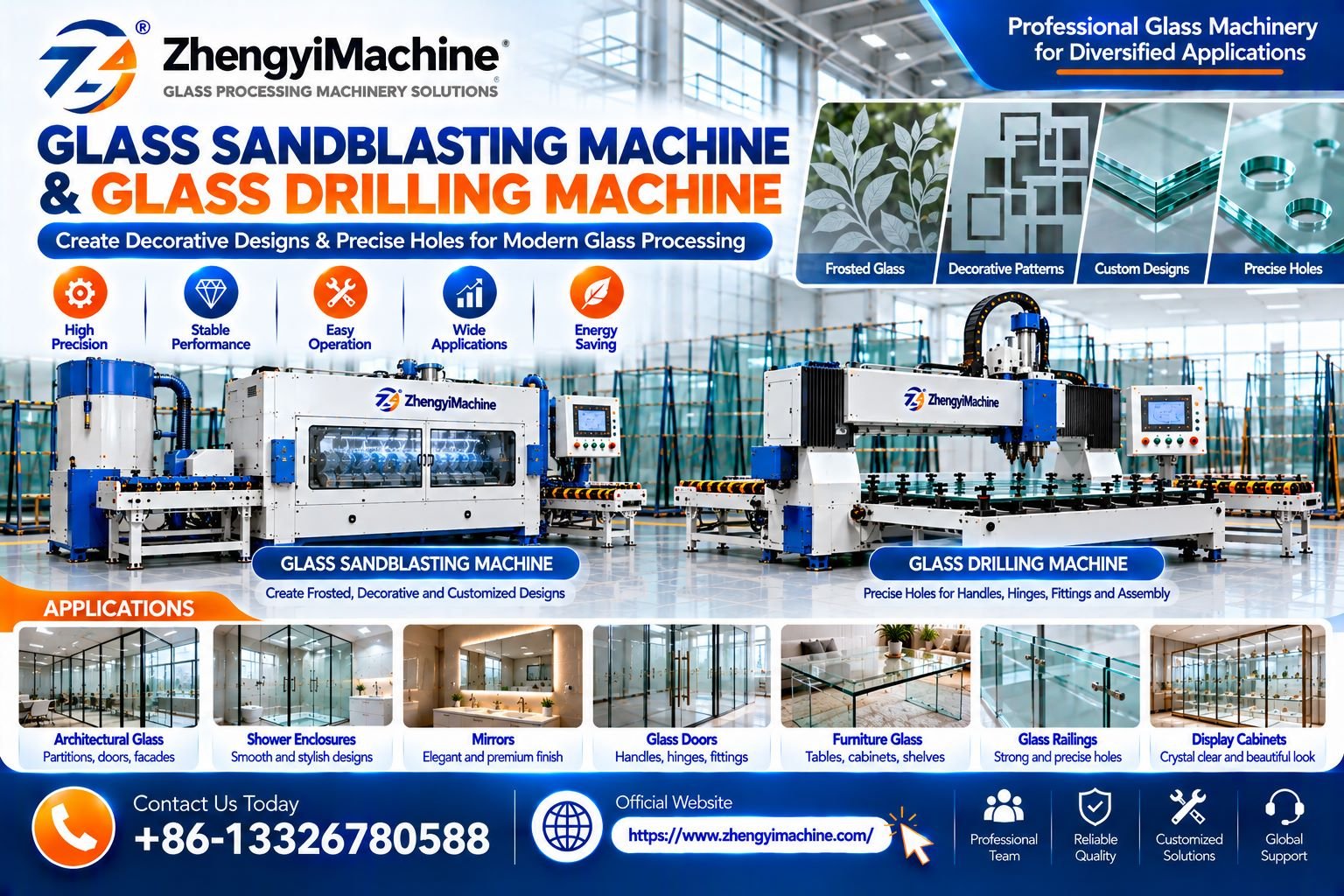
A Glass Sandblasting Machine creates frosted patterns, decorative markings, and textured finishes that can support selected privacy and visibility requirements.
Meanwhile, a Glass Drilling Machine produces accurately positioned holes for compatible fittings, handles, and approved mounting systems.
Together, these technologies allow glass fabricators to address functional design requirements beyond conventional decorative finishing.
The manufacturing challenge is creating glass products that remain visually attractive while supporting appropriate installation, accessibility, and user safety.
Why Transparent Glass Requires Thoughtful Design
Transparent architectural glass can create open and welcoming environments. However, large clear panels may sometimes be difficult for occupants to recognize.
Poorly visible glass partitions and doors can create collision risks, particularly in busy public areas.
Architects may therefore specify suitable visual markings or contrasting treatments to make glazing easier to identify.
Frosted designs and other approved manifestations can help distinguish transparent barriers from surrounding spaces.
Important planning considerations include:
- Glass visibility: Making transparent panels recognizable to occupants.
- Visual contrast: Providing suitable markings against surrounding backgrounds.
- Privacy requirements: Limiting direct visibility where appropriate.
- Installation accuracy: Ensuring correct positioning of glass fittings.
- Material compliance: Selecting glass suitable for the intended building application.
Manufacturers must follow approved project drawings and applicable glazing requirements.
Glass Sandblasting Machine Supports Visibility and Privacy
A Glass Sandblasting Machine uses controlled abrasive treatment to create textured or frosted effects on compatible glass surfaces.
This process can produce visual patterns that distinguish selected glass panels from fully transparent surroundings.
For example, an office partition may incorporate frosted bands at specified positions to improve recognition while maintaining an open appearance.
Healthcare consultation spaces may require partial visual screening, while educational buildings may use decorative treatments to distinguish glass entrances.
A practical architectural principle explains:
However, sandblasting does not automatically establish compliance with accessibility requirements.
The visibility, positioning, dimensions, and contrast of markings must be assessed against the relevant project standards.
Glass Drilling Machine Enables Secure Installation
Architectural glass installations often require openings for approved hardware.
A Glass Drilling Machine creates holes according to specified dimensions and positions, supporting compatible mechanical connections.
Relevant applications include:
Glass Entrance Doors
Selected doors require accurately positioned openings for approved handles and fittings.
Office Partitions
Certain partition systems use mechanically fastened connections that require precise drilling.
Public Information Displays
Glass panels incorporated into selected display systems may require appropriately designed mounting openings.
Interior Screens
Decorative and functional screens may need drilled holes for compatible installation hardware.
Incorrect hole placement can affect assembly and create unwanted stresses.
For this reason, manufacturers should verify hole dimensions, spacing, and edge distances against approved technical drawings.
Processing Accuracy Supports Safer Glass Installations
Installation quality begins during fabrication.
Panels that fail to meet approved specifications may not fit their intended mounting arrangements correctly.
The position of drilled openings must be compatible with the glass design, hardware specifications, and structural requirements.
Manufacturers must also consider the processing limitations of different glass materials.
For conventional thermally tempered glass, drilling is generally completed before tempering because drilling after thermal strengthening can cause breakage.
Similarly, abrasive surface treatment must be evaluated for its potential effect on glass strength.
An important engineering observation states:
Appropriate engineering verification remains essential for safety-critical glazing.
Improving Wayfinding Through Glass Surface Treatments
Public spaces depend on clear visual information.
Glass partitions, entrance screens, and internal doors should be recognizable without confusing building occupants.
Where suitable, sandblasted patterns can contribute to architectural visual communication.
For example, different frosted designs may distinguish selected areas within a public facility.
However, decorative patterns must not replace required signs, tactile information, or other accessibility provisions.
Manufacturers should coordinate surface-treatment specifications with architects and accessibility specialists.
The objective is to create products that complement building navigation while meeting appropriate technical requirements.
Quality Inspection Supports Functional Glass Design
Finished glass components require inspection according to their intended applications.
For sandblasted panels, manufacturers may check pattern positioning, texture consistency, and visible surface defects.
For drilled panels, inspection should address hole diameter, positioning, and signs of damage.
A practical quality-control procedure includes:
- Confirming approved fabrication drawings.
- Identifying the specified glass type.
- Verifying decorative treatment locations.
- Measuring drilled openings against required dimensions.
- Inspecting completed panels before packaging.
These activities support manufacturing consistency and reduce avoidable installation problems.
Visual inspection alone cannot establish every structural or safety requirement, so additional verification may be necessary.
Why Machine Selection Must Reflect Architectural Requirements
Not every glass machine supports identical processing capabilities.
Equipment selection depends on glass dimensions, material characteristics, production volume, and required accuracy.
Manufacturers considering sandblasting equipment should evaluate supported surface treatments, approved abrasive materials, and dust-containment arrangements.
For drilling equipment, relevant factors include positioning accuracy, tool compatibility, glass support, and cooling requirements.
Operator training and maintenance accessibility are also important.
Machinery should be selected according to verified technical needs rather than general claims about performance.
Responsible Production Practices Remain Essential
Glass processing can involve sharp materials, moving machinery, abrasive particles, and other workplace hazards.
Manufacturers should establish appropriate safety procedures and provide suitable protective equipment.
Sandblasting requires effective containment and dust-control arrangements, while drilling requires approved tooling and stable material support.
Processing residues must be managed according to applicable environmental requirements.
Responsible manufacturing connects product quality with worker protection and professional equipment maintenance.
Industry Outlook: Functional Design Adds Value to Glass Fabrication
Glass manufacturing increasingly involves collaboration between architects, fabricators, accessibility specialists, and installation professionals.
Surface treatments can support selected privacy and visibility requirements, while accurately drilled components contribute to proper assembly.
The broader opportunity lies in delivering products that satisfy both visual and functional specifications.
For glass manufacturers, understanding the intended building application is as important as selecting suitable processing equipment.
Frequently Asked Questions (FAQs)
1. What is a glass machine used for in architectural projects?
A glass machine performs specialized fabrication operations such as cutting, drilling, grinding, polishing, or surface treatment, depending on its design and capabilities.
2. How does a Glass Sandblasting Machine improve glass visibility?
A Glass Sandblasting Machine creates frosted or textured areas that can make selected transparent panels more recognizable. Compliance depends on the specified design and applicable standards.
3. What is the purpose of a Glass Drilling Machine?
A Glass Drilling Machine creates accurately positioned holes for approved hardware, mounting systems, and architectural fittings.
4. Can glass be drilled after tempering?
Conventional fully tempered glass generally cannot be drilled after tempering without breaking. Required drilling is normally completed before thermal strengthening.
5. What should manufacturers consider when producing glass for public buildings?
Manufacturers should verify glass specifications, accessibility requirements, surface treatments, drilling accuracy, approved hardware, and applicable safety standards.
Media Contact
Department: Sales, Product Information & Media Enquiries
Industry: Glass Processing Machinery, Sandblasting & Drilling Equipment
Contact: +86-13326780588
Email: zhengyi@zhengyi.cc
Official Website: https://www.zhengyimachine.com/