
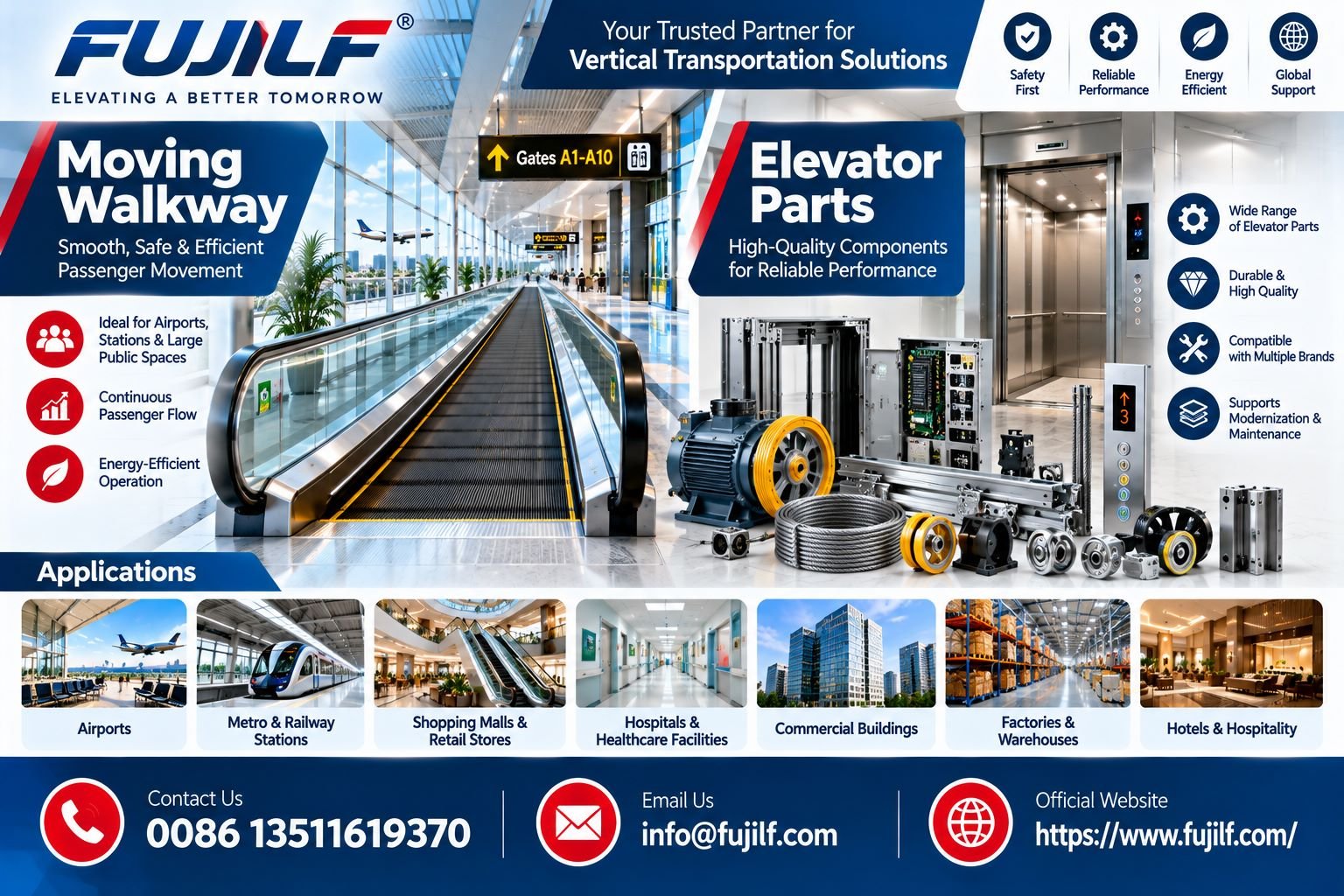
Luxury resorts, entertainment destinations, and large hospitality complexes often combine accommodation towers, restaurants, recreation areas, conference facilities, and landscaped attractions within a single property.
While these environments offer visitors numerous amenities, travelling between different facilities can become challenging when destinations are separated by considerable distances.
A moving walkway can provide convenient horizontal transportation along suitable routes, particularly where guests need to travel between major resort facilities.
Meanwhile, compatible elevator parts support the reliable operation of elevators connecting accommodation floors, parking facilities, and shared amenities.
The growing focus on integrated resort mobility encourages developers to consider horizontal and vertical transportation as complementary elements of the guest experience.
The objective is to improve convenience without compromising accessibility, safety, or the visual character of the property.
Why Large Resorts Need Coordinated Transportation Planning
Resort developments often occupy extensive areas with different functional zones.
Guests may move between accommodation buildings, dining facilities, swimming pools, entertainment areas, and conference venues.
When these facilities are poorly connected, visitors may experience unnecessary walking distances or difficulty identifying convenient routes.
A properly positioned moving walkway can support transportation along selected pedestrian corridors.
Elevators provide connections between building levels, particularly within accommodation towers and multi-storey facilities.
Important planning considerations include:
- Guest movement: Understanding the routes connecting major resort attractions.
- Walking distances: Identifying corridors where assisted pedestrian movement may be beneficial.
- Accessibility: Providing suitable transportation options for guests with different mobility needs.
- Equipment positioning: Connecting transportation systems with entrances and key destinations.
- Passenger comfort: Considering the surrounding environment and the intended guest experience.
These elements can help create more convenient resort layouts.
Moving Walkway Installations Can Connect Separate Resort Facilities
A moving walkway transports passengers along a horizontal or gently inclined moving surface.
In suitable resort environments, it may support movement between accommodation areas, parking structures, shopping promenades, and entertainment facilities.
For example, a large integrated resort might consider a moving walkway within an enclosed corridor connecting its hotel complex to a recreational attraction.
Such an installation should be evaluated according to corridor dimensions, passenger demand, accessibility provisions, and equipment safety requirements.
An important hospitality planning principle explains:
A moving walkway should therefore be selected for a genuine transportation requirement rather than solely for its visual appeal.
Elevator Parts Support the Guest Experience Behind the Scenes
Elevators are essential to multi-storey hospitality properties.
Their performance depends on numerous interconnected mechanical, electrical, and electronic components.
Correctly specified elevator parts help maintain functions such as door operation, lifting movement, floor positioning, and passenger controls.
Relevant component categories include:
Door Operating Mechanisms
Elevator doors must operate according to approved specifications to support safe passenger entry and exit.
Control Systems
Controllers coordinate elevator movement and associated operating functions.
Drive Components
Drive equipment supports mechanical movement according to the elevator’s design and rated capacity.
Positioning Components
Appropriate positioning and leveling systems help elevators stop accurately at designated landings.
Protective Devices
Safety components perform essential functions and require compatible specifications and professional inspection.
Replacement parts must match the requirements of the installed elevator system.
Accessibility Should Guide Resort Transportation Decisions
Resorts welcome guests with different physical capabilities and transportation requirements.
Some visitors may use wheelchairs, mobility aids, or other assistive equipment.
Others may be travelling with young children or carrying substantial luggage.
Moving walkways can offer convenience for certain passengers, but they do not replace required accessible pedestrian routes.
Likewise, escalators and moving walkways may not be suitable for all mobility devices.
A properly designed elevator network can provide essential step-free connections between building levels.
Developers should evaluate the complete accessible journey from resort entrances to accommodation, dining, recreation, and other guest facilities.
Accessibility is most effective when transportation systems connect logically with appropriate pathways.
How Resort Architecture Influences Equipment Selection
Hospitality design often emphasizes landscaping, open spaces, architectural themes, and attractive guest surroundings.
Transportation equipment must complement these environments without compromising operational requirements.
A moving walkway installed within a resort corridor should be evaluated for available space, structural support, surrounding finishes, and passenger circulation.
Elevators may require particular attention to cabin appearance, operating noise, and location within guest accommodation areas.
However, decorative modifications must remain compatible with approved equipment designs.
A relevant engineering observation states:
This balance helps developers integrate practical mobility solutions into visually distinctive resort environments.
Managing Equipment Performance During High Guest Demand
Large resorts can experience concentrated passenger movement near restaurants, entertainment venues, and accommodation entrances.
Transportation planning should consider these conditions when selecting equipment capacity and placement.
For moving walkways, developers should examine corridor approaches, landing arrangements, and expected passenger flow.
Elevator performance depends on factors such as rated capacity, building configuration, control systems, and passenger demand.
The right solution should reflect documented transportation requirements rather than assumptions about equipment performance.
Professional engineering evaluation can help identify suitable arrangements for individual properties.
Maintenance Planning Supports Resort Operations
Transportation equipment problems can affect guest convenience and building accessibility.
Professional maintenance is therefore an important part of resort facility management.
Moving walkway servicing may include inspection of moving surfaces, handrails, drive mechanisms, and protective devices.
Elevator maintenance requires attention to relevant mechanical components, controls, doors, and safety equipment.
Facility managers should maintain accurate equipment records and follow manufacturer servicing instructions.
When purchasing replacement elevator parts, technicians must verify model compatibility and relevant technical specifications.
A planned maintenance program supports dependable operation, although appropriate contingency procedures remain necessary.
Selecting Transportation Equipment for Hospitality Developments
Resort operators should assess their specific infrastructure requirements before choosing transportation equipment.
A suitable evaluation should consider passenger demand, accessibility, installation conditions, environmental exposure, and maintenance support.
Developers should also confirm whether proposed moving walkways are designed for indoor, covered, or other approved installation environments.
Elevator components must be selected according to verified equipment documentation.
The overall objective is to create a connected transportation network that supports the resort’s intended operations while maintaining appropriate safety standards.
Frequently Asked Questions (FAQs)
1. What is a moving walkway?
A moving walkway is a transportation system that carries passengers along a horizontal or gently inclined route. It is commonly associated with large public facilities and may be suitable for selected hospitality developments.
2. How can moving walkways benefit luxury resorts?
Moving walkways can help guests travel along suitable extended corridors, reducing the physical effort required to reach certain facilities.
3. Why are elevator parts important in hospitality buildings?
Reliable elevator parts support the mechanical, electrical, and safety functions of elevators, helping maintain appropriate transportation performance.
4. Are moving walkways accessible to wheelchair users?
Moving walkways are generally not a substitute for accessible routes suitable for wheelchair users. Resorts should provide appropriate accessible alternatives that meet applicable requirements.
5. What should resort developers consider when selecting elevator components?
Developers should verify equipment compatibility, manufacturer specifications, safety requirements, qualified installation support, and maintenance arrangements.
Media Contact
Department: Business Enquiries & Vertical Transportation Solutions
Industry: Moving Walkways, Elevators, Escalators & Elevator Components
Contact: 008613511619370
Email: info@fujilf.com
Official Website: https://www.fujilf.com/