
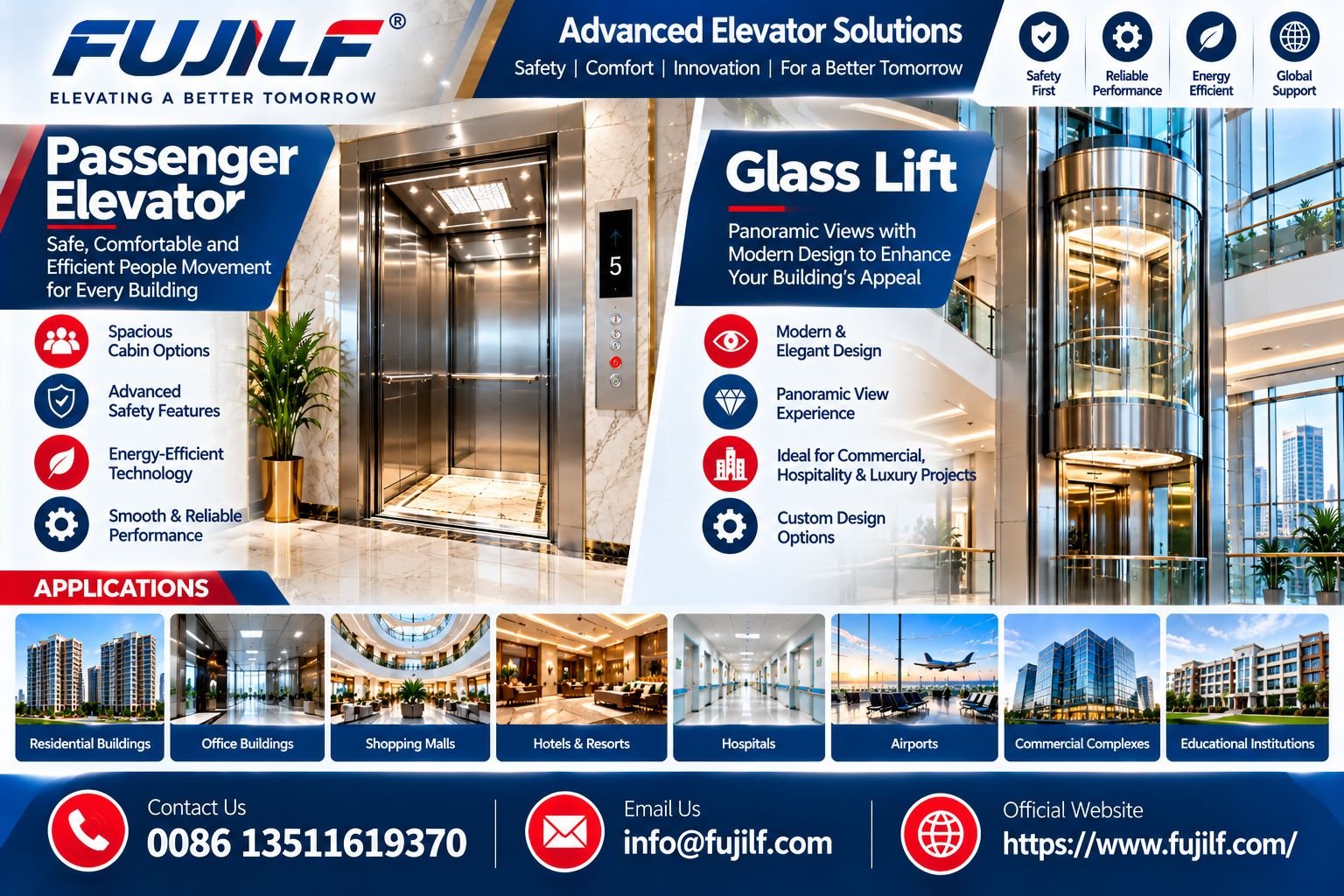
While elevator selection often focuses on appearance, capacity, and technology, the final stages of installation are equally important.
A passenger elevator provides essential vertical transportation in residential buildings, offices, hotels, shopping complexes, and public facilities.
Meanwhile, a glass lift offers a visually distinctive transportation solution through transparent or partially transparent cabin and enclosure designs.
Both systems require appropriate installation verification, safety inspections, and operational testing before entering service.
The central consideration for building developers is ensuring that installed equipment performs according to its approved specifications and applicable safety requirements.
A well-organized commissioning process helps identify installation problems and supports a smoother transition from construction to regular building operations.
Why Elevator Commissioning Matters for Building Owners
Elevator commissioning involves checking that an installed lifting system satisfies relevant technical, safety, and functional requirements.
It is an important step before the equipment becomes available for normal passenger use.
For a passenger elevator, commissioning may involve verifying mechanical installation, electrical systems, operating controls, door mechanisms, and protective devices.
The required procedures depend on equipment design, applicable technical standards, and local regulations.
Important considerations include:
- Installation verification: Confirming that equipment components match approved specifications.
- Operational testing: Evaluating movement, stopping, and door performance.
- Safety inspection: Checking relevant protective devices and operating arrangements.
- Control-system verification: Assessing passenger controls and required communication features.
- Documentation review: Confirming the availability of applicable inspection and handover records.
These activities help establish whether an elevator is appropriately prepared for service.
Glass Lift Installations Require Additional Technical Attention
A glass lift introduces architectural elements that require careful integration with the elevator’s mechanical and structural systems.
Transparent panels may form part of the cabin enclosure, shaft surroundings, or other approved components.
Although glass elevators can create an impressive visual experience, their installation must satisfy appropriate structural and passenger safety requirements.
Engineering teams should consider glazing specifications, mounting arrangements, supporting frames, and equipment clearances.
The installation should also account for vibration, expected mechanical loading, and suitable maintenance access.
An important engineering principle explains:
This perspective emphasizes the importance of evaluating decorative and functional components together.
Installation Accuracy Influences Elevator Performance
Elevator systems depend on accurately installed components working together.
Incorrect alignment, unsuitable connections, or incomplete installation procedures can affect equipment performance.
For passenger transportation systems, installation assessments may consider guide arrangements, landing interfaces, door clearances, and electrical connections.
The exact requirements depend on the elevator configuration.
A panoramic installation may also require verification of the transparent enclosure and its supporting structure.
Qualified installation teams should follow approved drawings, manufacturer instructions, and applicable regulations.
Accurate installation helps create the conditions necessary for dependable operation and appropriate equipment maintenance.
Testing Passenger Comfort and Operational Functions
Elevator commissioning should consider the passenger experience alongside technical performance.
A passenger elevator must operate according to its approved characteristics, including suitable movement, stopping accuracy, and door operation.
Depending on the equipment, operational checks may address:
Floor-Level Accuracy
Correct leveling supports safe passenger entry and exit, particularly for individuals using wheelchairs or other mobility aids.
Door Functionality
Elevator doors should open and close according to their approved operating arrangements and protective requirements.
Passenger Controls
Floor-selection buttons, displays, communication systems, and applicable accessibility features should operate correctly.
Ride Characteristics
Suitable acceleration, deceleration, and vibration performance contribute to passenger comfort.
These evaluations help determine whether the installed system meets its intended operational requirements.
Safety Certification and Regulatory Compliance
Elevator installation and operation are subject to technical and regulatory requirements that vary across jurisdictions.
Building owners should understand which inspections, approvals, and documentation are necessary before equipment enters service.
An equipment manufacturer’s certificate alone may not satisfy every local installation or operating requirement.
Independent inspection or additional regulatory approval may be necessary, depending on the location and equipment classification.
A practical safety principle states:
Professional assessment remains essential when confirming that equipment is suitable for passenger operation.
Why Building Handover Documentation Is Important
The transition from construction to building operation requires accurate information.
Facility managers need access to relevant elevator documentation to understand the installed system and its maintenance requirements.
Useful records may include operating instructions, equipment specifications, inspection reports, maintenance recommendations, and applicable approval documents.
These records support future servicing and help maintenance personnel identify installed components.
For glass elevators, documentation should also address appropriate glazing inspection and maintenance requirements.
Clear handover information helps building owners establish practical equipment-management procedures.
Training Facility Teams for Elevator Operation
Elevator operation involves responsibilities beyond the installation contractor.
Building maintenance personnel and facility managers should understand how to report faults, arrange servicing, and respond to equipment-related incidents.
Training should reflect the equipment’s intended use and applicable safety procedures.
Building staff should not attempt unauthorized technical repairs or passenger rescue operations.
Instead, emergency procedures should identify the appropriate qualified personnel and communication arrangements.
Effective training supports a clearer division of responsibilities between building operators and maintenance providers.
Evaluating Elevator Suppliers Beyond Equipment Price
Developers selecting elevator systems should consider technical support and commissioning capabilities alongside purchase costs.
Important evaluation questions include:
- Does the equipment meet the building’s passenger capacity and accessibility requirements?
- Are installation specifications and structural requirements clearly documented?
- Does the supplier provide appropriate commissioning information?
- Are applicable safety inspections and approvals addressed?
- What maintenance and technical support arrangements are available?
Buyers evaluating a glass lift should also confirm glazing compatibility and associated structural requirements.
A complete technical assessment helps reduce uncertainty during equipment handover.
Industry Outlook: Building Readiness Depends on Verified Performance
Elevators are important infrastructure assets that require dependable performance throughout their service life.
For residential towers, commercial developments, and public buildings, commissioning provides an opportunity to verify essential operating characteristics before regular use.
Well-documented installation procedures, professional inspections, and clear maintenance arrangements support responsible building management.
The broader industry lesson is that elevator quality depends on the complete process, from equipment selection and installation to testing and operational handover.
Frequently Asked Questions (FAQs)
1. What is a passenger elevator?
A passenger elevator is a vertical transportation system designed to carry people between different building levels. It is commonly used in residential, commercial, hospitality, and public buildings.
2. What is the purpose of elevator commissioning?
Elevator commissioning verifies that installed equipment meets applicable technical, functional, and safety requirements before entering regular operation.
3. Does a glass lift require special installation considerations?
Yes. A glass lift requires appropriate evaluation of glazing, structural supports, mounting arrangements, equipment clearances, and applicable safety requirements.
4. What documents should building owners receive after elevator installation?
Relevant documents may include operating manuals, technical specifications, inspection records, maintenance instructions, and required regulatory approvals.
5. Why is professional elevator maintenance important after commissioning?
Professional maintenance helps identify equipment deterioration, address technical faults, and support continued operation according to manufacturer recommendations and applicable regulations.
Media Contact
Department: Business Enquiries & Vertical Transportation Solutions
Industry: Passenger Elevators, Glass Lifts & Vertical Transportation Equipment
Contact: 008613511619370
Email: info@fujilf.com
Official Website: https://www.fujilf.com/